The State of Caregiving
What’s really happening inside America’s caregiving crisis? Explore new national findings on stress, cost pressures, and delayed care planning.
READ FULL REPORT
2026 REPORT • A PLACE FOR MOM

Family caregivers are women and men who, at an average age of 52, provide unpaid support across a wide range of care needs for their parents, spouses, or other adults. Some are considered sandwich generation caregivers who also care for their own children, and many hold down paying jobs as well. According to a 2025 report published by AARP and the National Alliance for Caregiving, the number of family caregivers to adults age 50 and older in the United States has risen significantly in recent years. In 2020, there were more than 41 million caregivers, and by 2025, that number increased to more than 50 million.1
Family caregiving is mostly unpaid labor, yet the value of America’s caregiver work is high. One recent estimate of the annual worth of family caregiving in the U.S. is more than $873 billion.2
What follows is a profile of family caregiving in the U.S., including caregiver statistics such as demographics and household income, where care is provided, time spent on caregiving duties, and the impact of this work on caregivers’ finances and health.
In the U.S., family caregivers are typically middle-aged, with an average age of 52. Most of them have completed some higher education: the majority (68%) have earned a college or professional degree or college credit; 22% have completed high school only.
Looking at the racial breakdown of family caregivers, 73% identify as white or Caucasian, 19% as Black, 10% as Hispanic or Latino, 3% as Native American or Alaskan Native, and 2% as Asian, with respondents able to select more than one race or ethnicity.
More than half (53%) are married and more than a third (40%) report that they are single, widowed, separated, or divorced, which means they do not have the potential support of a partner. Our survey showed that caregivers are male and female in equal numbers, however research from AARP has shown that more women are caregivers than men.1 Most (86%) are caring for one older person, and 14% care for two or more people.
Family caregiving takes place primarily in Southern states of the U.S., where 43% of caregivers say they reside.
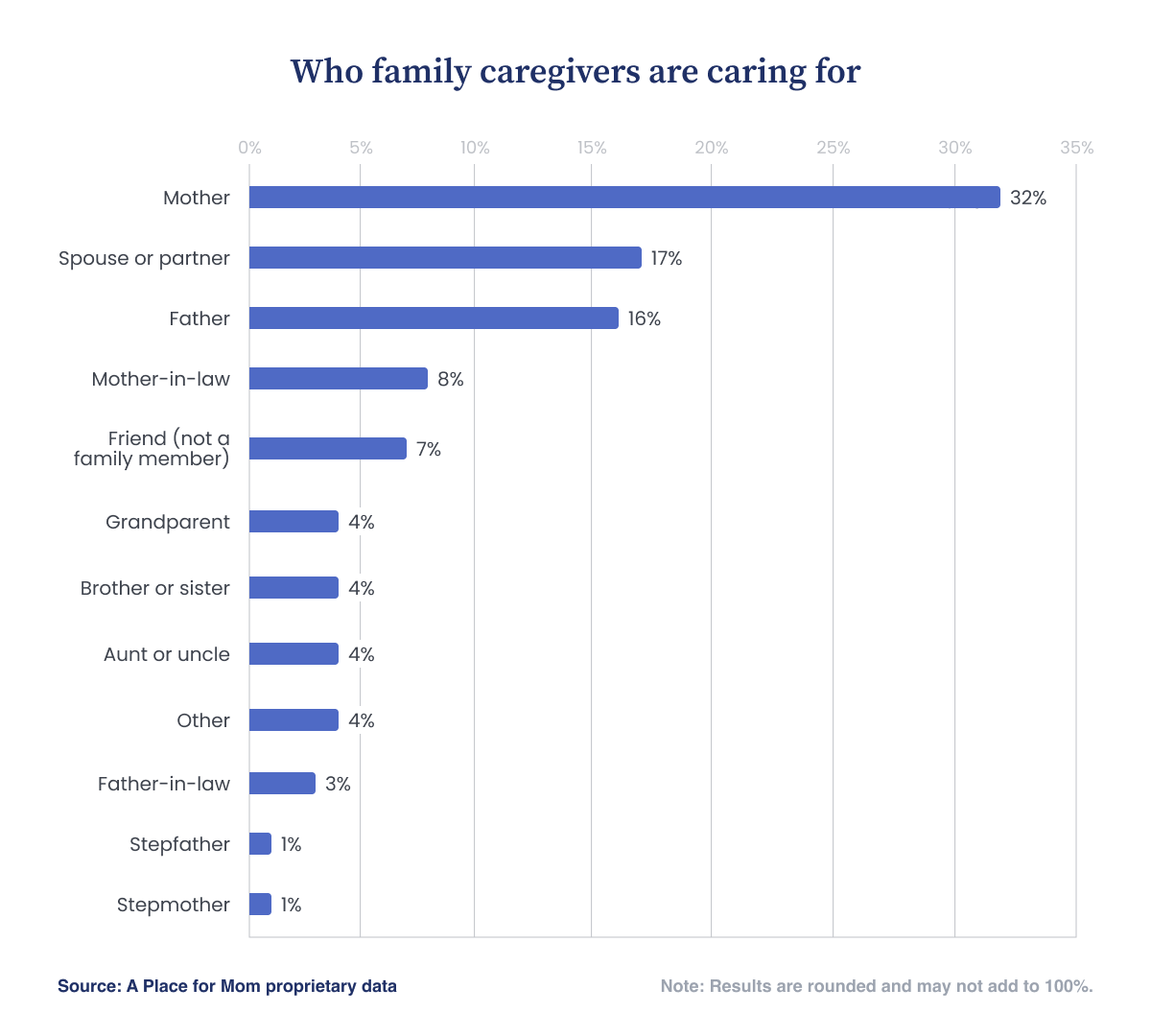
Older adults receiving care from family members are most often the mothers or mothers-in-law of the caregiver (40%), followed by partners or spouses (17%), and fathers or fathers-in-law (19%). Other family members — siblings, aunts, uncles, grandparents, and step-parents — account for 14% of the people who are receiving care, and friends account for 7% of care recipients. Recipients of family care are typically married (43%) or widowed (31%).
The total annual household income for 59% of family caregivers is between $25,000 and $99,999. Even though the average annual income for caregivers is $69,962, nearly 1 in 5 live on a household income of $24,999 or less. At the other end of the scale, 23% have a household income of between $100,000 and $150,000 or more.
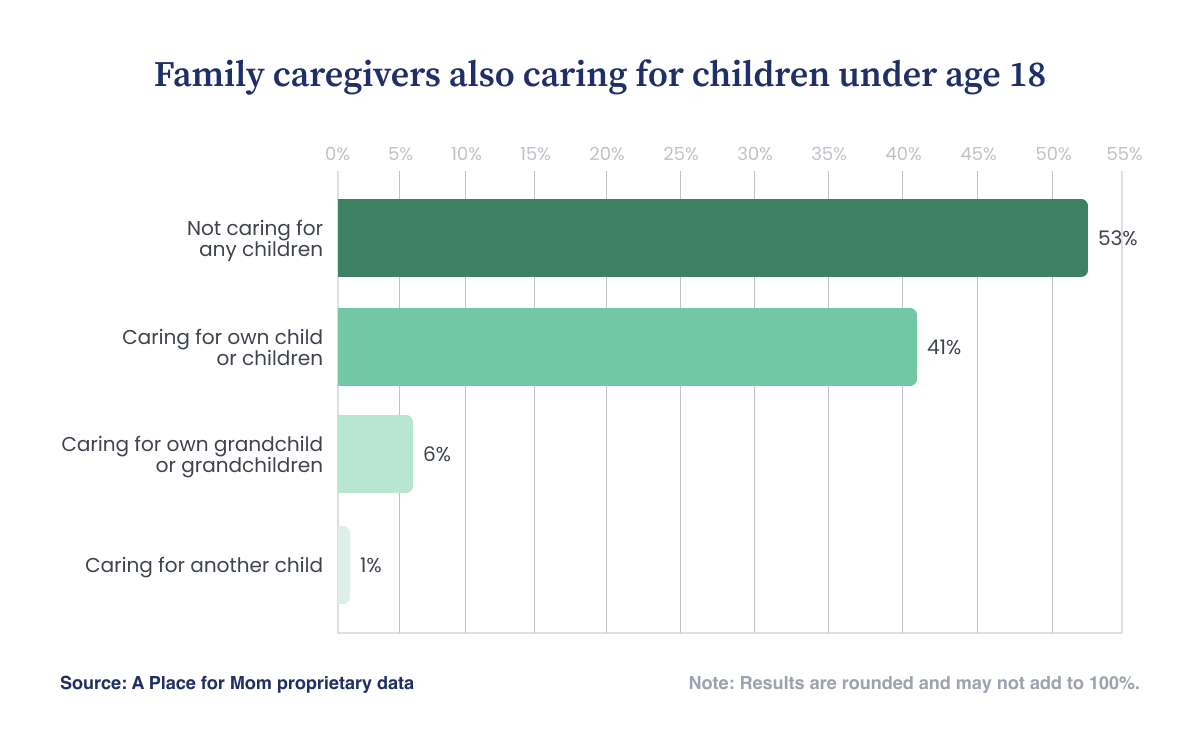
Almost half of all caregivers (48%) are a part of the sandwich generation. While caring for older adults in the family, these caregivers are also caring for children who are younger than 18. Among these caregivers, 41% care for their own children, 6% care for grandchildren, and 1% care for another child.
Family caregivers devote significant time to caregiving duties — an average of 22.8 hours each week. Their responsibilities may include physical care, managing medications, coordinating doctor appointments, transportation, shopping, and cooking.
Almost three-quarters (72%) say that their duties require up to 30 hours every week, effectively making it a part-time job. And 28% provide care for 31 hours or more per week. This level of time commitment can shape caregivers’ daily routines and limit time available for work, family, and personal needs.
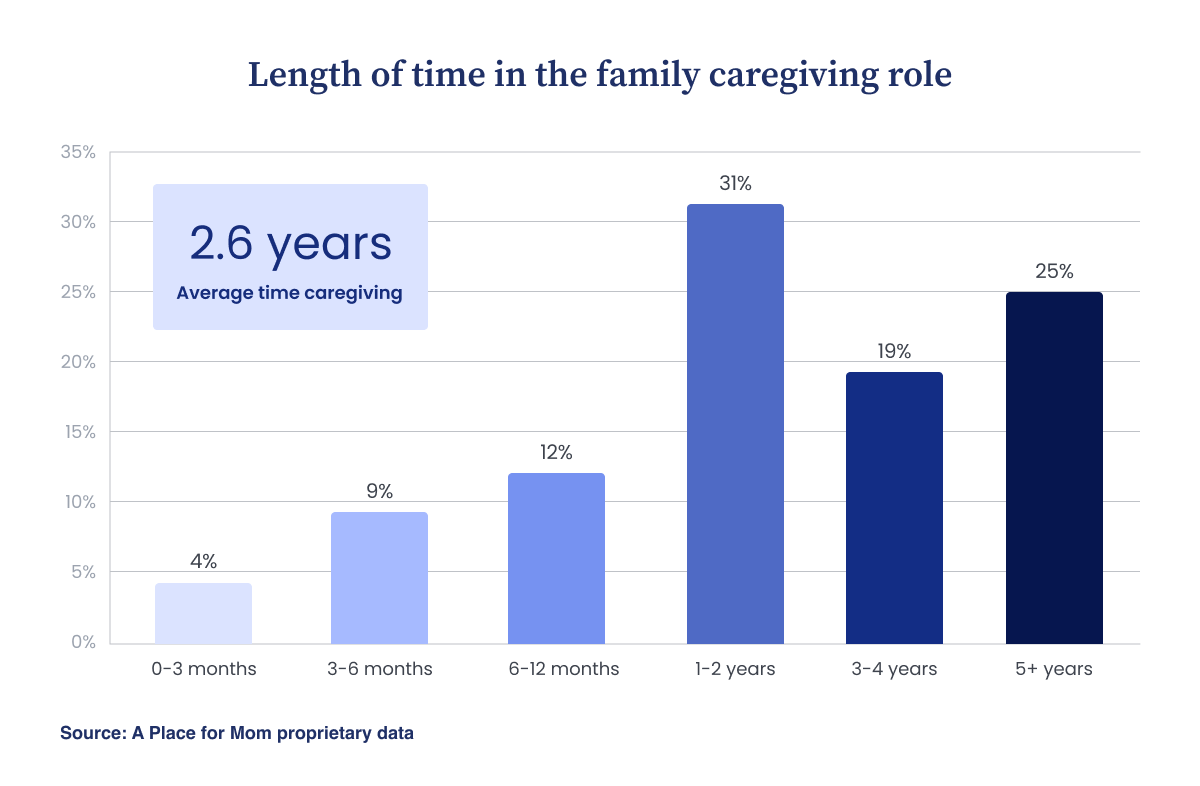
Many caregivers have been doing this work for a considerable amount of time — the average being more than 2 ½ years. Half of caregivers say they’ve been providing care for between one and four years; 25% say they’ve been providing care for five years or longer.
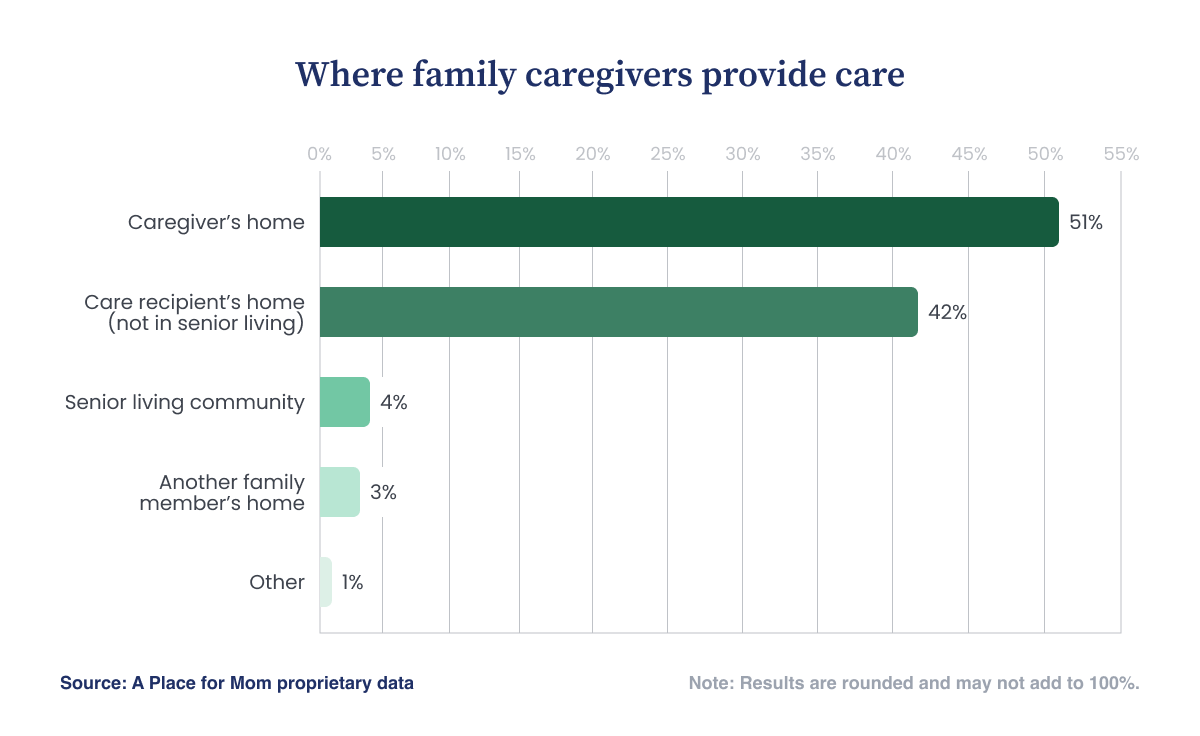
Family caregiving most often takes place in a private home — either in the home of the caregiver (51%) or in the home of the care recipient (42%) — which may provide recipients with the comfort and security of being in familiar surroundings. Just 4% of care recipients live in a senior living community, where presumably the majority of their care is provided by staff. And 3% of care recipients reside in the home of a family member other than their primary caregiver.
Among the top reasons caregivers say they prefer to provide care in their home or that of a family member include:
These feelings may bolster caregivers as they navigate the challenges of their work.
Because caregivers are primarily caring for someone in their own family, it follows that 62% live with those they care for. This situation can be convenient and cost-saving, but may also cause strain for both the caregiver and the recipient.
In addition to other potential reasons for strain, this living arrangement may cause the caregiver to feel that their responsibilities are constant with no real time boundaries, a factor that could lead to feelings of burnout.
The 38% of caregivers who do not live with the people they care for must commute to do this work. This increases the potential for expenses such as gas, car repair, public transportation fares, or hired car services, which may or may not be reimbursed.
Among caregivers who commute, travel times vary:
Commuting time, when added to the hours of caregiving, leaves less personal time and fewer opportunities to rest and recharge for the caregiver.
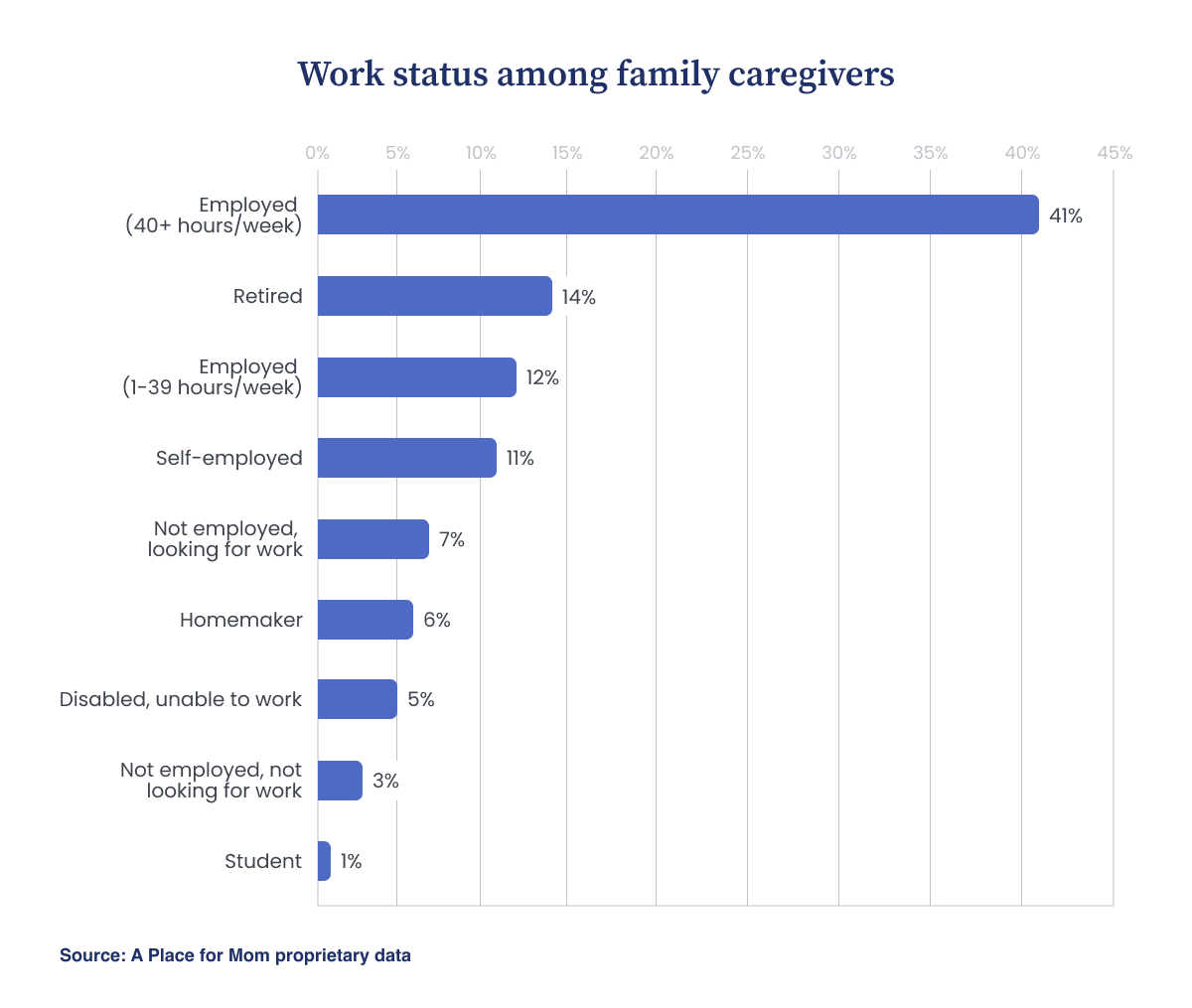
Caring for a family member is not the only job caregivers are doing: 53% also hold paid jobs, working anywhere from one to more than 40 hours per week. Roughly 1 in 10 caregivers are self-employed, which may mean they can set their own work and caregiving schedules. Seven percent say they are looking for paid work, suggesting they need additional income and may be under financial strain.
Caregiving extends into retirement as well: 14% of family caregivers report being retired and may rely on pensions and Social Security benefits for income. The 6% of caregivers who describe themselves as homemakers may rely on income from a working spouse or partner. These may be among the 28% of caregivers who say that their responsibilities have had no impact on their workday.
Caregiving, particularly unpaid caregiving, can have a major impact on the caregiver’s career and income:
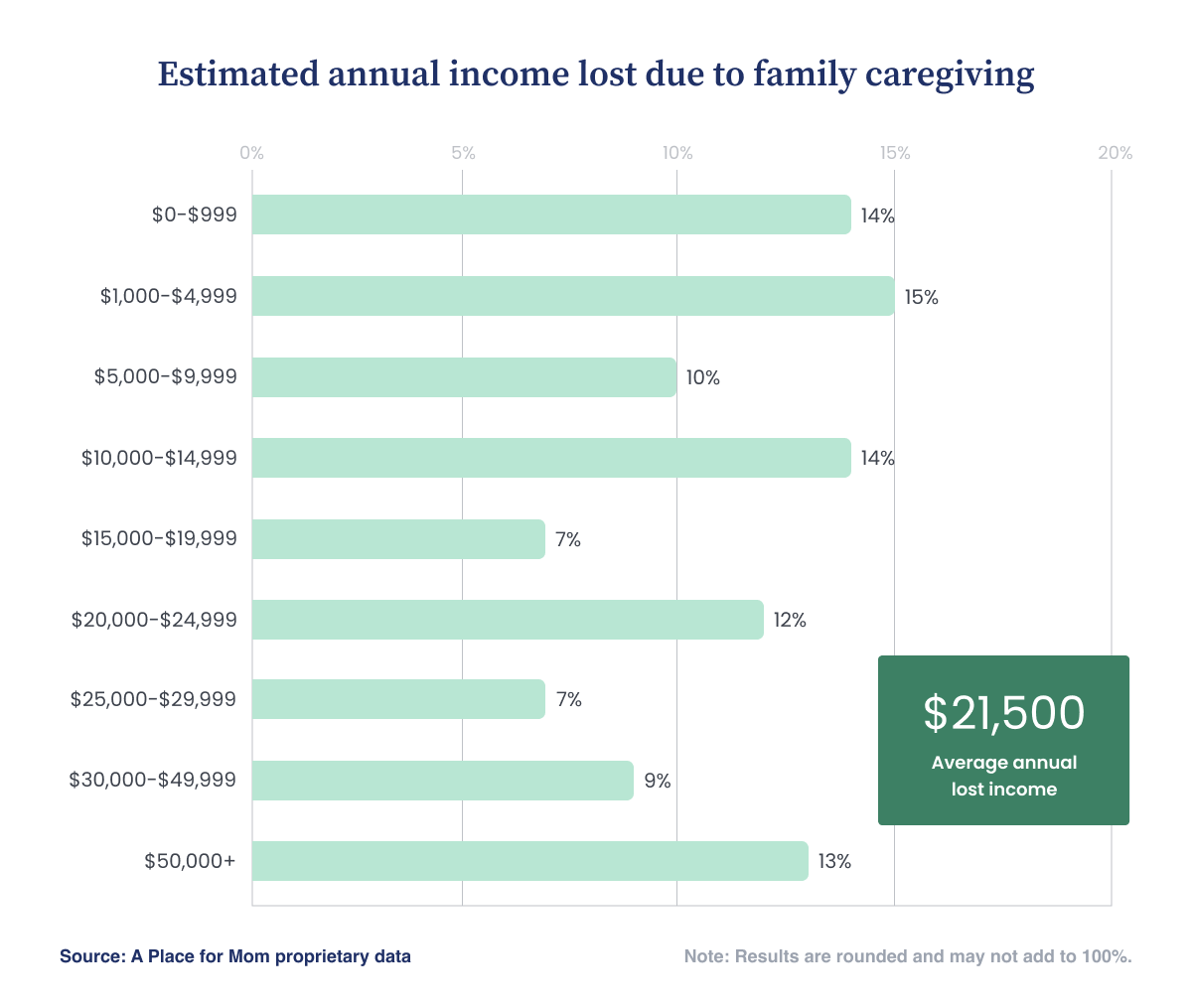
Of those who report quitting their jobs or having less time to focus on work, nearly one-third (29%) say they’ve lost up to $5,000 in income due to caregiving. The average estimated total annual lost income for caregivers is $21,500. As the cost of living increases each year, this lost income will likely become more problematic.
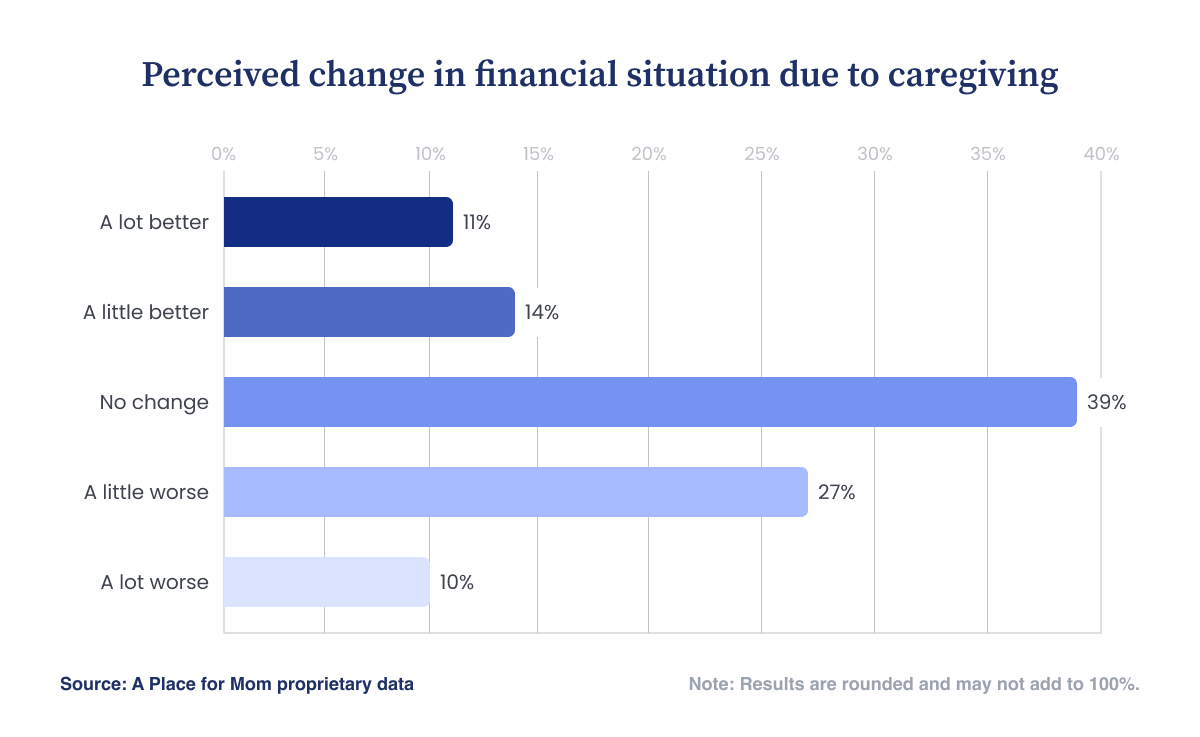
One financial benefit of family caregiving is that it can save families money they might otherwise spend on in-home care or senior living. Additionally, some caregivers are compensated for their work through personal care agreements, self-directed Medicaid programs, or VA caregiver support programs. In fact, 25% of caregivers say that caregiving has improved their financial situation.
But for many caregivers, their responsibilities have caused financial strain. More than a third — 37% — say their financial situation has worsened due to taking on caregiving responsibilities. Perhaps caregiving interferes with their focus on a paying job and/or additional care-related expenses cut into their family budget. The strain may come from not being able to save money, pay for necessities, or avoid going into debt to make ends meet.
Though a large percentage (69%) of caregivers say they are experiencing some financial strain related to their caregiving, 32% say they do not have any financial strain at all.
Many family caregivers report experiencing emotional, mental, and physical effects tied to their caregiving responsibilities, often on a recurring basis. Stress and anxiety are among the most reported experiences, with three-quarters of caregivers saying they feel stressed or anxious at least monthly. More than 7 in 10 report feeling overwhelmed, and 67% say they have trouble sleeping with some regularity.
Caregivers also report changes in their physical and emotional health over time. Nearly half (47%) say their physical health has declined since taking on caregiving duties, while others report experiencing feelings such as sadness, anger, guilt, or grief on a weekly or monthly basis. For some, these effects are persistent: 42% of caregivers report experiencing emotional strain or feelings of burnout at least weekly.
Social well-being is also affected for many caregivers, though experiences vary. In considering their own interactions with others, 39% of caregivers say their social lives have worsened because of caregiving duties. Another 36% of caregivers say their social life has not been affected, and a quarter of caregivers say that their social life has improved. Together, these findings suggest that the impact of caregiving on well-being is not uniform, and that caregivers’ experiences differ widely based on their circumstances and support systems.
Except where noted, this report is based on an online quantitative survey commissioned by A Place for Mom and conducted by Morning Light Strategy in September 2025. The study included 1,029 surveys of a representative sample of family caregivers across the United States An age minimum of 40 and a maximum of 75 were set for survey respondents.
AARP & National Alliance for Caregiving. (2025, July 24). Caregiving in the U.S. 2025.
Otsuka America Pharmaceutical, Inc., & Columbia University Mailman School of Public Health. (2024, October). America’s Unseen Workforce: What will it take to change the future of family caregiving?
A family caregiver is someone who provides care or support to a parent, spouse, other relative, or friend who needs assistance because of aging, illness, or disability. Caregiving duties may include helping with daily activities, managing medications, coordinating care, providing transportation, or offering emotional support.
Yes, some family caregivers may receive compensation through personal care agreements, self-directed Medicaid programs, Veterans Affairs caregiver programs, or other state-specific initiatives. However, most family caregiving in the United States remains unpaid.
Many family caregivers say they provide care at home because they feel a sense of duty or privilege, want their loved one to remain in familiar surroundings, or believe they can provide the best possible care. In this survey, most caregiving took place either in the caregiver's home or the care recipient's home.
The sandwich generation refers to adults who care for both an older family member and children under age 18. In A Place for Mom's survey, nearly half of family caregivers (48%) reported balancing both caregiving responsibilities.
Caregiving can affect many aspects of a caregiver's life, including work, finances, physical health, mental well-being, and social relationships. While experiences vary, many caregivers report financial strain, emotional stress, disrupted sleep, and changes to their overall health as they balance caregiving with other responsibilities.
According to AARP and the National Alliance for Caregiving, more than 50 million Americans provided unpaid care to adults age 50 and older in 2025, up from more than 41 million in 2020.
What’s really happening inside America’s caregiving crisis? Explore new national findings on stress, cost pressures, and delayed care planning.
READ FULL REPORT
Dive into the data behind how family caregivers navigate senior care decisions, including when they start searching, care preferences, and the obstacles ...
READ FULL REPORT